

The most expensive startup mistakes are often the ones someone could have warned you about.
A wrong assumption about the market. A product nobody really needs. A decision that sets you back months.
Founders need to make mistakes to learn.
But do they always have to be their own?
This is where mentoring comes in.
Mentoring for Startups
Why the right mentor can make all the difference, how to find the right match, and when it’s time for a fresh perspective.
Between the first spark of an idea and a growing startup lie countless decisions.
- Which problems are actually worth solving?
- When is a product ready for the market?
- Who do you need on your team?
- And how does your role change when a handful of people suddenly becomes an organisation?
There are no universal answers to these questions.
And often, it’s precisely when the stakes are highest that founders lack the experience to fully anticipate the consequences of their decisions.
That’s where mentoring can make a real difference.
Simply because experienced mentors have faced similar challenges before. They can recognise patterns more quickly and ask questions you might never have thought to ask yourself.
1. Why Mentoring Is So Valuable for Founders
Building a startup means making decisions in the face of uncertainty.
In the early stages, reliable data is often scarce, resources are limited, and many assumptions about customers, products, or business models still need to be tested. At the same time, founders carry the responsibility for whatever comes out of those decisions.
Experienced mentors can help uncover blind spots, sharpen priorities, and identify common mistakes before they become costly.
That doesn’t mean they’re always right. Even highly successful entrepreneurs can get things wrong.
The point isn’t to blindly follow their advice. It’s to learn from their experience and draw the right conclusions for your own business.
Research also suggests that mentoring can play a meaningful role in entrepreneurial development. A study by Eesley and Wang on entrepreneurial mentorship found that mentors can influence entrepreneurial career decisions, highlighting the potential impact of these relationships.
The greatest value of a mentor isn’t telling you what to do. It’s helping you see what you might be missing.
2. Sometimes, the Most Valuable Perspective Comes from Outside
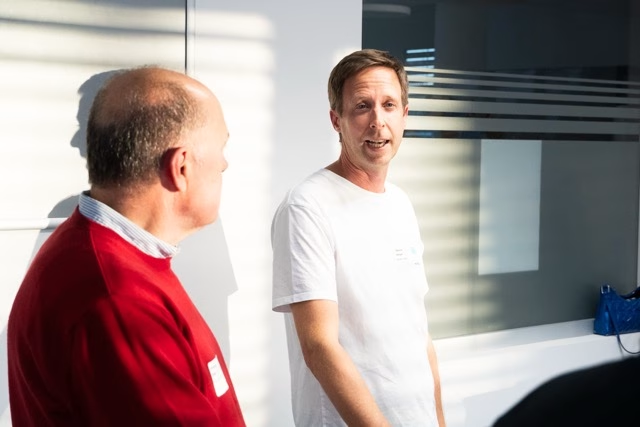
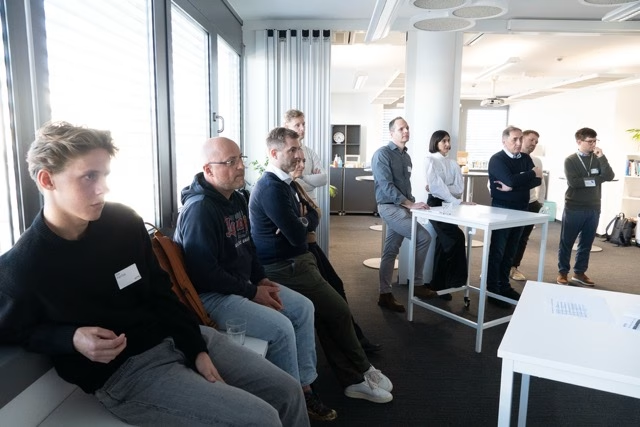
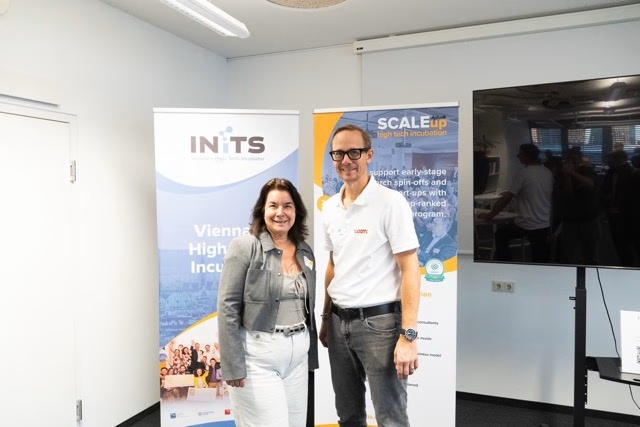
The value of a fresh perspective became particularly clear at the latest INiTS Mentors Day.
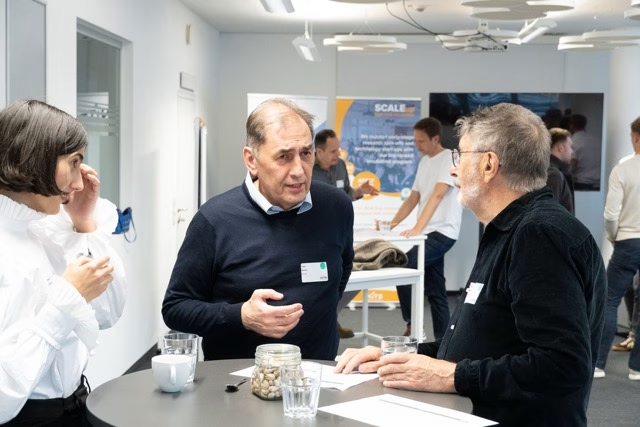
The event brings together founders from the SCALEup incubation programme and experienced mentors, giving them the opportunity to connect, exchange experiences, and explore potential mentoring relationships.
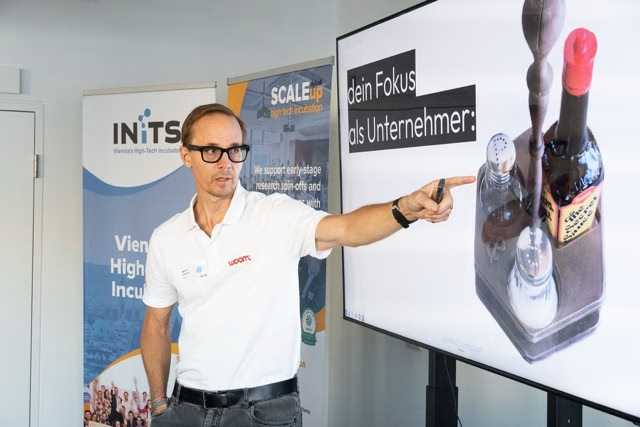
This time, Marcus Ihlenfeld, co-founder of Austrian children’s bicycle brand woom, joined us to share some of the lessons he has learned throughout his entrepreneurial journey.
One of his key messages was something that sounds obvious to most founders but is surprisingly easy to forget in practice:
Start with the problem. Think from the customer’s perspective.
Technology-driven startups, in particular, often invest enormous energy into developing their solutions. The team knows every technical detail, is excited about what’s possible, and keeps working to make the product better and better.
But somewhere along the way, one crucial question can get lost:
Is the problem we’re solving actually important enough to our customers?
Instead of spending months perfecting a product, it’s often better to build prototypes quickly and start collecting feedback early.
Because the longer you work on what you believe is the perfect solution, the more time you risk investing in assumptions that might not hold up in the real world.
So don’t be afraid of negative feedback! The earlier you invite it, the sooner you can identify what’s not working, make improvements, and correct mistakes while they’re still relatively inexpensive to fix.
This is exactly where good mentors can add tremendous value.
They ask the uncomfortable questions, challenge assumptions, and encourage teams to look at their ideas through the eyes of their customers.
3. How Do You Find the Right Mentor?
Ideally, your search shouldn’t start with:
„Who’s the most successful person I know?“
Instead, ask yourself:
„What’s the biggest challenge I need to solve right now?“
Because an impressive CV doesn’t automatically make someone the right mentor for your startup.
A founder developing their first product might benefit most from someone with hands-on experience in product development, customer discovery, and go-to-market strategies.
A startup already generating revenue and preparing for international expansion, on the other hand, might need expertise in scaling, sales, organisational development, or fundraising.
Three questions can help you find the right match:
- Relevant experience: Has this person faced challenges similar to the ones you’re dealing with right now?
- Personal fit: Do you feel comfortable openly discussing uncertainties, mistakes, and difficult decisions?
- Time and commitment: Does this person have the capacity and genuine interest to engage with you regularly?
Personal chemistry deserves particular attention.
After all, the most valuable conversations often happen when founders feel comfortable talking about the things that aren’t going well.
So how do you find out whether there’s a good match?
At INiTS, here’s how we approach it:
We bring founders from our SCALEup incubation programme together with experienced mentors for an evening in a relaxed atmosphere.
Through personal conversations, both sides get the chance to discover whether their expertise, expectations, and personalities are a good fit.
Because a successful mentoring relationship needs more than relevant experience. It also needs trust.
4. When Is It Time to Change Mentors?
A mentoring relationship doesn’t have to last forever to be successful.
Startups evolve. And as they grow, the questions founders need to answer change too.
In the early stages, the focus is often on understanding a real customer problem, developing an initial solution, and finding a viable business model.
Later, entirely different challenges take centre stage: processes, leadership, team structures, financing, growth, and international markets.
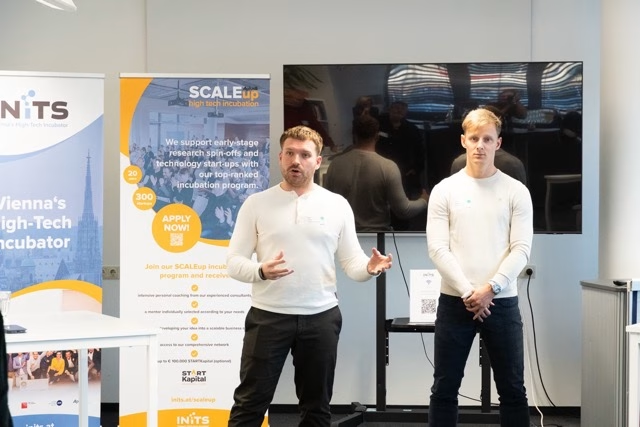
At the INiTS Mentors Day, Marcus Ihlenfeld also emphasised that different stages of a company’s development require different leadership styles and team structures.
In the beginning, a strong hands-on mentality is often essential. People need to move quickly, take responsibility, and find pragmatic solutions.
But as the company grows, it needs more structure, clearer responsibilities, and people who can manage increasing complexity.
The same principle applies to mentoring.
Someone who was incredibly helpful during your initial product development might not be the best person to guide you through international expansion.
That doesn’t mean the relationship has failed.
It might simply mean that it has fulfilled its purpose at a particular stage of your journey.
A good time to reassess your mentoring relationship is whenever your startup’s main challenges begin to change.
Other signs that it might be time for a fresh perspective include:
- Your conversations no longer lead to meaningful new insights.
- Your mentor’s experience is no longer aligned with your current challenges.
- The relationship lacks openness, trust, or constructive criticism.
- There’s no longer a clear purpose or shared goal for your conversations.
There’s no fixed timeline for mentoring. Some relationships are valuable for just a few months, while others support founders for years.
What matters is setting clear expectations from the beginning and regularly reflecting on whether the relationship is still creating value.
Here’s something worth remembering: Your mentor doesn’t necessarily have to grow with your startup. But your mentoring should.
5. What Even the Best Mentors Can’t Replace
As valuable as mentoring can be, the responsibility for the business ultimately stays with the founders.
This was another key message Marcus Ihlenfeld shared at the INiTS Mentors Day.
He spoke about the importance of setting ambitious goals, staying true to your values, and continuously improving.
He also emphasised that product development and sales must go hand in hand.
A great product isn’t enough if nobody knows how to bring it to market.
And even the strongest sales team will struggle in the long run if the product doesn’t solve a meaningful customer problem.
For founders, this means bringing different strengths and competencies together within the team and taking responsibility for the bigger picture.
Mentors can help prepare for critical decisions, challenge your thinking, and offer fresh perspectives.
But ultimately, it’s the founders who have to make those decisions.
Conclusion: You Don’t Have to Learn Everything the Hard Way
Entrepreneurship will always be a learning process. Mistakes, uncertainty, and difficult decisions are part of the journey.
But not every lesson has to come from a mistake you’ve made yourself.
Sometimes, all it takes is a conversation with someone who’s faced a similar situation before.
An uncomfortable question. A different perspective. Or one piece of advice that helps you spend the next few months moving in the right direction instead of the wrong one.
The right mentor won’t take the challenges of building a startup off your shoulders.
But they can help you approach those challenges with greater clarity, experience, and confidence.
Mentoring at INiTS: Part of the SCALEup Incubation Programme
At INiTS, we support innovative startups through our SCALEup incubation programme, providing not only expertise and access to a strong network but also opportunities to work with experienced mentors.
Our Mentors Day creates a space for meaningful connections. Founders and mentors get to know each other, exchange perspectives, and explore where working together could create real value.
Because sometimes, the next big step in a startup’s journey begins with just one good conversation.
Find out more about the INiTS SCALEup incubation programme: inits.at/scaleup
Sources and Further Reading
- Eesley, C. E. & Wang, Y. (2017): Social Influence in Career Choice: Evidence from a Randomized Field Experiment on Entrepreneurial Mentorship. Research Policy, 46(3), 636–650.
- Blank, S. (2013): Why the Lean Start-Up Changes Everything. Harvard Business Review.
- Kram, K. E. (1985): Mentoring at Work: Developmental Relationships in Organizational Life. Scott, Foresman.
- St-Jean, É. & Audet, J. (2012): The Role of Mentoring in the Learning Development of the Novice Entrepreneur. International Entrepreneurship and Management Journal, 8, 119–140.